

Dr. Liberty Galvin Tackles Integrated Projects Across Oklahoma and Beyond
Tuesday, October 13, 2026
Dr. Galvin’s primary commodity focus is wheat and other small grains in Oklahoma. Through an Oklahoma Wheat Commission (OWC) funded project in 2024-2025, Dr. Galvin’s team has identified triple-herbicide resistant Italian Ryegrass as well as other cheatgrass species.
Her current research includes exploring alternative herbicide options, including pre- and post-emergent products, for control of winter annual weedy grasses. Year 2 of field studies will be conducted in 2026-2027 to assess rainfall activation timing and pH influences on residual activity. Dr. Galvin is currently accepting seed samples that are believed to be resistant for herbicide screening. This allows producers and consultants lab-generated resistance profiles allowing them to make more informed decisions on what not to spray.
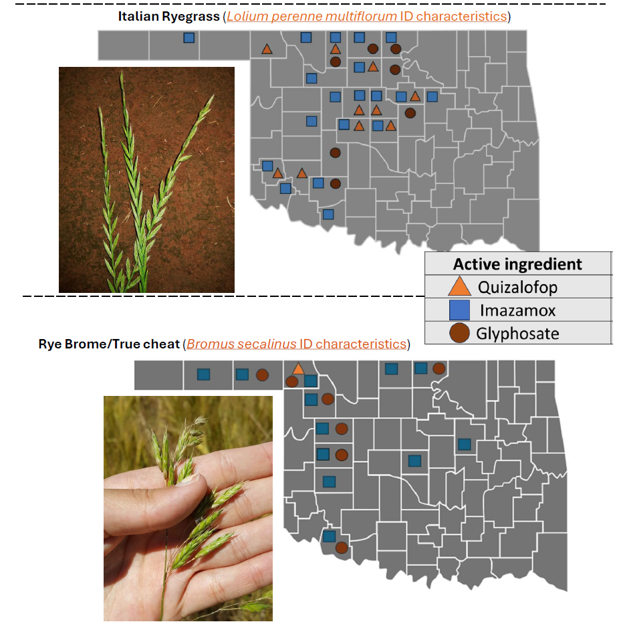 Figure 1. Italian ryegrass, rye, brome and true cheat in Oklahoma.
Her current research includes exploring alternative herbicide options, including pre- and post-emergent products, for control of winter annual weedy grasses. Year 2 of field studies will be conducted in 2026-2027 to assess rainfall activation timing and pH influences on residual activity. Dr. Galvin is currently accepting seed samples that are believed to be resistant for herbicide screening. This allows producers and consultants lab-generated resistance profiles allowing them to make more informed decisions on what not to spray.
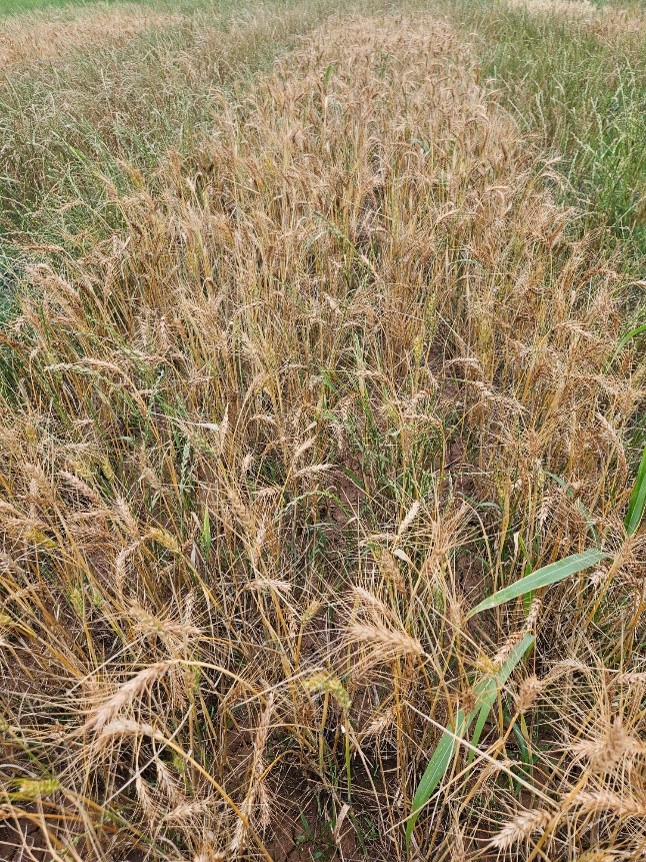 Figure 2. A wheat plot surrounded by green Italian Ryegrass plants. Drought severely effected the 2025-2026 wheat crop.
Grant project – Integrated Weed Management
Dr. Galvin conducts cultural weed control studies which focus on assessing non-chemical options across a broader agronomy setting. Some of these options include delayed planting dates to disturb and control the first flush of annual weeds. This is paired along with variety selection and varying levels of weed control. Year 2 of this experiment will be conducted in the 2026-2027 season in collaboration with Dr. Amanda Silva, OSU Wheat Agronomy Extension Specialist. “At the end of the day, producers want to know how these decision influence their bottom line”, said Galvin. Her graduate student, Claire Roche, is working with Dr. Gonzalez, the NW Area Agricultural Economics Specialist, to develop an economic model to compare input costs and final yields, from various management decisions.
Crop Competition Against Weeds at Establishment Utilizing Seed Treatments
Dr. Galvin has been working with seed treatments to determine if they will give wheat a competitive advantage at the establishment phase over Italian Ryegrass compared with untreated wheat.
This project aims to quantify “early vigor” in seed-treated wheat with increasing infestation rates of Italian Ryegrass. Graduate student Sushmita Dey measured plant height and emergence, root- and shoot- weight and area.
Dr. Galvin says most don’t look at root biomass—as it is difficult to do—although there have been several successful experiments with this. Dr. Galvin anticipates publishing the information later this year, with a field-scale demonstration in the works for the 2026-2027 field season using multiple seed treatments.
| Figure | Description |
|---|---|
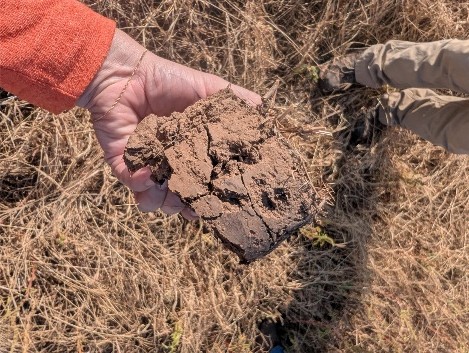
| 0-2” section was compact with signs of worm activity. |
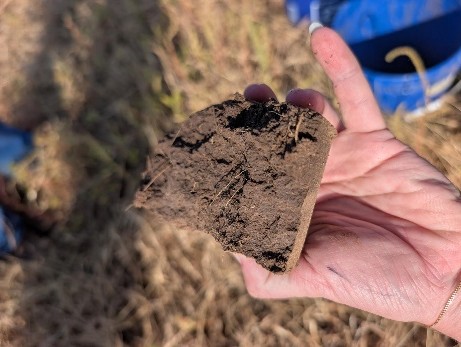
| 2-4” section was sandier and more fell apart quickly. |
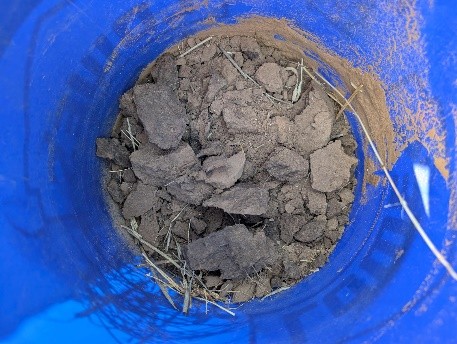
| 4-6” soil did not hold together at all. |
Precision Soil Disturbance for Weed Control in Long-term, No-till Systems – Five-year study
Dr. Galvin’s mechanical control project is in collaboration with Dr. Daniel Adamson, the Soil and Water Conservation Extension Specialist. The goal is to look at the intersection between soil conservation and weed control in historically no-till wheat-summer crop rotation systems. The farmer collaborator for this project, a recent Plant and Soil Sciences graduate, graciously tilled parts of their fields in July 2026 so that Connor Cox, the lead grad student on the project, can study weed seed bank dynamic shifts and changes in soil health under Dr. Adamson’s guidance.
Long-term tillage has mostly been achievable through chemical weed control due to the removal of mechanical control. However, this has resulted in a concentration of herbicide-resistant weeds, as determined by the OWC-funded grant. For the weed seed bank, her team is measuring deposits back into the seed bank and withdrawals. Seed germination and seed decay are both withdrawals from the in-ground seed bank and both are depleting the seed bank. The hypothesis is that herbicide-resistant grassy weeds are buried and consequently decay. Those seeds that have been buried at depth for 20+ years do not have the same resistance profiles as those accumulated at the soil surface. It is hypothesized that by doing precision tillage once every 5-10 years growers will reap benefits of tillage for weed control, and possibly reduce compaction with limited soil-losses.
Precision Drone-application of Herbicides
As for the future…
In 2024, Dr. Galvin did a small needs assessment of ~150, 60% of which indicated they were either currently using or interested in incorporating drones into their agricultural operations. Later that year she did a small study measuring spray coverage of various combinations of altitude and speed using a spray-drone, or UAV (unmanned aerial vehicle). Since then, she has attended 3 conferences and given 10 continuing education talks regarding spray-drone herbicide applications. She is completing a pasture broadleaf weed control protocol in Lawton, Checotah, and Stillwater to determine if ground and aerial applications result in the same degree of weed control. She is currently discussing collaborative efforts with other weed science colleagues across the Southern region to improve language on herbicide labels to improve UAV applications. “UAVs are an exciting new frontier in agriculture” she commented, “but we have to gain better insights into how to optimize applications across landscapes and environmental conditions”.