

Committed to protecting wildlife
Protecting our feathered friends
Pioneering research for wildlife conservation
OSU's Department of Natural Resource Ecology & Management (NREM) has partnered with Feather Friendly, a company that designs collision deterrent window markers, in one of the largest bird-window collision mitigation projects undertaken by any university.
What are those dots?
Window markers have been installed at the Noble Research Center and Gallagher-Iba Arena. NREM researchers monitor collisions daily at these two buildings and other buildings on campus with the goal of determining how effective the markers are in deterring collisions.
Did you know?
Up to 1 billion birds die from window collisions each year in the U.S. Unlike humans, birds don't see glass as a barrier. In fact, birds are often drawn to windows by reflections of sky and vegetation in the glass, and by light emitted through windows at night.
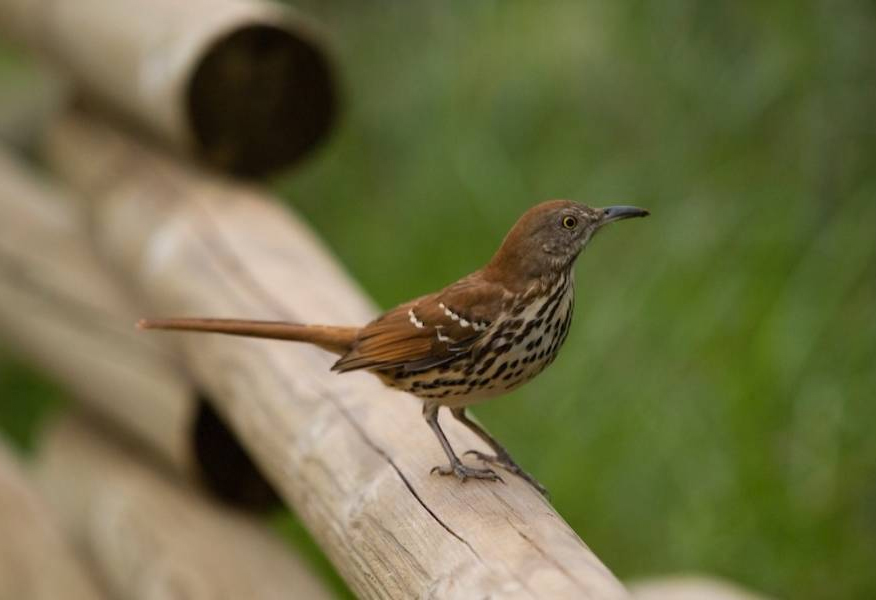
The result? Hundreds of millions of birds die every year in the U.S. from striking windows — and billions of birds collide worldwide. Many species susceptible to collisions are migratory songbirds beloved by millions, like warblers, hummingbirds, buntings, thrushes and cardinals.
How you can help
Making Your Windows Bird-Safe
Make the windows in your home safe for birds. There are many ways to do this, but here are some products you can purchase or create your own version of:
Join Lights Out to Protect Migratory Birds
Participate in Lights Out initiatives. Keep up to date on the number of birds passing through your area each night by checking out BirdCast, and on nights when a high volume of migratory birds are expected to pass through, turn off the lights in your home and/or businesses.
Raise Awareness: Share to Protect Birds
Spread the word! Social media is a powerful tool for conservation, and you can help make a difference by sharing articles, videos and other content about bird-window collisions to help ensure that this enormous threat to bird populations does not go unnoticed.
Report Injured or Deceased Birds on Campus
If you come across a dead bird on the OSU campus, please leave it alone so that researchers from NREM can document and collect it for the study. If you find a bird that appears to have hit a window but is still alive, assess its condition. If it can move around on its own and doesn't appear to have obvious external injuries, leave it be. If it is clearly injured, take it to the small animal rehab at the Boren Veterinary Hospital in Stillwater, or see this link to find a wildlife rehabilitator near you.